
Introduction:
When I first began studying Vietnam Artificial Intelligence, I was struck by how quickly Vietnam was moving in the global technology landscape. You can almost feel a seismic shift in the air, a real transformation that goes far beyond its golden coastlines and rich history.
Working in SEO and tech, I’ve watched the digital age turn the country into a strategic destination for AI innovation, development, and investment across Southeast Asia. By 2025, what used to be seen as an emerging market is now being talked about by global enterprises from Sydney to Silicon Valley, a place rising as the region’s next tech tiger.
Digging deeper for an in-depth guide, I found that the AI landscape here is growing thanks to a bold government strategy, a vibrant talent pool, and strong real-world applications, shaping a truly dynamic environment. I’ve even had moments partnering with a local expert, and that hands-on view showed me how far the country has come.
Overview of Artificial Intelligence in Vietnam & Vietnam’s Position in the Global AI Market:
Vietnam’s ascent in the AI sphere isn’t a coincidence. It’s the result of a combined trouble combining strategic government direction, a swell in foreign investment, and a thriving domestic tech scene.
A Government with a Vision for AI:
When I began exploring how Vietnam supports its artificial intelligence growth, I kept seeing how the Vietnamese government has genuinely rolled out the red carpet for AI. What impressed me most was its bold move with the National Strategy, built on Research, Development, and the Application of Artificial Intelligence, heading toward 2030.
The first time I read Decision No. 127/QĐ-TTg, it didn’t feel like a dry policy paper at all; it felt more like a real roadmap shaped by ambitious goals. The biggest Goal aims to place the country among the top 4 countries in ASEAN and inside the top 50 globally, especially in AI research, development, and application.
Which honestly signals a level of confidence you don’t often see in an emerging market. What stands out in practice is the clear Action behind the words: building national data centers, driving open data initiatives, and forming legal frameworks that push AI development while keeping ethical standards intact.
Whenever I talk to teams on the ground, they tell me how this strong governmental backing creates a stable environment, the kind of predictable environment that truly supports de-risking investment and encourages long-term partnerships. Experiencing this firsthand has shown me why the country feels like a place where strategy meets momentum.
A Magnet for Global Tech Giants & Investment:
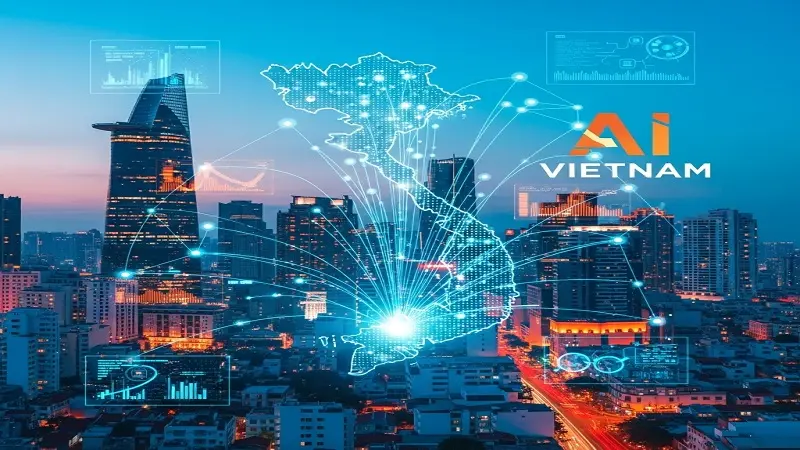
Whenever I look at how quickly Vietnam’s artificial intelligence is advancing, it’s clear the world is truly taking notice. The Vietnamese AI market, valued at approximately $470 million in 2022, is now projected to soar to $1.52 billion by 2030, and that kind of explosive growth doesn’t happen by accident.
It’s being fueled by significant investments from global tech leaders, something I’ve seen firsthand while speaking with teams building products for the region. You have giants like NVIDIA, a global pioneer in AI technology, which has revealed plans to collaborate with Vietnam on a dedicated AI Research and Development Center.
What’s even more exciting is how companies like Qualcomm have launched a new AI R&D Center in Hanoi, marking a major step in upgrading the local tech ecosystem, while Google keeps steadily growing its presence by supporting the development of AI startups and advancing digital skills training initiatives.
This steady influx of capital and deep expertise forms a kind of virtuous cycle, constantly accelerating innovation and expanding capabilities across the local workforce. From what I’ve observed in my own work with regional teams, this momentum feels both natural and unstoppable.
A Dynamic and Thriving Startup Ecosystem:
Whenever I work with founders in the region, I can feel the entrepreneurial spirit in Vietnam; it’s genuinely palpable. The number of AI-focused startups has skyrocketed from 60 in 2021 to nearly 300 in 2024, and that growth alone shows why the country is now placing itself second only to Singapore in Southeast Asia.
Many of the teams I’ve met aren’t interested in creating clones of Western products; instead, they’re driven, agile, and deeply innovative companies determined to build something meaningful inside the fast-growing world of vietnam artificial intelligence.
What makes this scene even more exciting is how these groups are developing bold “Made in Vietnam” AI solutions that are tailored to real domestic challenges and equally tough global challenges. I’ve seen ideas being shaped around healthcare, agriculture, and finance, and the level of problem-solving feels refreshingly grounded.
Deep Dive into Vietnam’s AI Talent Pool: Quality Meets Cost-Effectiveness
Technology is only as good as the people who make it. This is where Vietnam’s most significant advantage lies, its moral capital.
Nurturing the Next Generation of AI Experts:
With a young, tech-savvy population of over 100 million, Vietnam is fast becoming a hotspot for AI innovation. Leading universities such as the Hanoi University of Science and Technology and the Vietnam National University have embedded comprehensive, hands-on AI, Data Science, and Machine Learning programs into their curricula, producing a steady stream of skilled professionals.
From my experience working with startups here, this abundant source of talent is not only eager but remarkably adaptable, quickly mastering the latest technologies and applying them to real-world challenges. International initiatives like Intel’s “AI for All” program are further democratizing AI education, ensuring a continuous pipeline of experts ready to support a dynamic environment for development and investment.
This combination of local expertise and global collaboration strengthens Vietnam’s position as a strategic destination for AI innovation, making the country an exciting place for anyone looking to partner with a local expert in the digital age.

Building a Multilingual, Globally-Minded Workforce:
The new generation of Vietnamese tech talent is impressively globally oriented, with English proficiency in the IT sector reaching an all-time high. This skill set helps break communication barriers, making offshore projects smoother and more efficient.
From my experience collaborating with local teams, their ability to adapt to different languages and work styles gives them a real edge in international AI development initiatives. Having extensive experience working with demanding markets such as Japan, South Korea, Singapore, and the US.
Vietnamese teams are highly adept at navigating complex project requirements and thriving in diverse work cultures. This combination of linguistic ability, technical expertise, and global perspective makes Vietnam an ideal place to partner with a local expert and tap into a dynamic environment for AI innovation, development, and investment.
Maximizing Value with Smart Investment:
Opting for vietnam artificial intelligence development gives companies access to a high-quality talent pool at a fraction of the cost, making it one of the most attractive options in Southeast Asia. On average, businesses can expect cost savings of 30-40% compared to hiring equivalent talent in North America or Europe.
From my experience working with local teams, this approach is not about cheap labor, it’s about smart economics that deliver higher return on investment while maintaining top quality and continuous innovation. By leveraging this dynamic environment, companies can achieve more without sacrificing excellence.
The combination of skilled professionals, affordable rates, and robust AI development capabilities positions Vietnam as a strategic destination for forward-thinking businesses seeking to maximize efficiency and growth in the digital age.

Key Applications of Artificial Intelligence Transforming Vietnamese Industries:
AI in Vietnam has moved far beyond theoretical exploration and is now delivering palpable value across multitudinous sectors. These success stories demonstrate the practical and transformative power of AI, working real real-world problems and driving profitable growth.
Navigating the Challenges and Opportunities:
No journey of rapid growth comes without hurdles, and the vietnam artificial intelligence landscape is no exception. From my experience in the market, understanding both challenges and immense opportunities is crucial for companies looking to thrive. These opportunities arise from a dynamic environment, a vibrant talent pool, and a surge of AI innovation.
Challenges often relate to infrastructure, regulations, and the efficient scaling of solutions. By carefully navigating these factors, businesses can tap into Vietnam’s unique position as a strategic destination for development, investment, and cutting-edge AI innovation.
Overcoming Key Challenges:
- Data Infrastructure is still evolving, and developing large-scale, high-quality, open datasets, especially in the Vietnamese language, remains a work in progress for AI innovation.
- Despite a growing talent pool, there is a competitive demand for highly experienced AI scientists and researchers, making High-Level Expertise a critical factor for successful development and investment.
- The Regulatory Framework is evolving, with ongoing changes in data privacy and AI ethics, requiring careful navigation to operate safely and effectively in Vietnam’s dynamic environment.
Unlocking Unparalleled Opportunities:
- The massive domestic market driven by a strong push for digital transformation across all industries in Vietnam offers abundant potential for AI solutions, making it an ideal environment for testing and scaling innovations.
- Acting as a strategic gateway, Vietnam’s location and strong trade ties provide companies with a platform to expand into the broader ASEAN region, connecting to new markets efficiently.
- A tech-receptive culture means Vietnamese consumers and businesses are often early adopters of new technology, creating a fertile ground for piloting and growing new AI applications in real-world settings.
Maximizing Gains by Outsourcing AI Projects:
Outsourcing AI development to Vietnam provides companies with more than just cost advantages; it gives access to skilled talent, a fast-growing infrastructure, and a collaborative mindset that accelerates AI innovation.
From my experience working with local teams, these benefits are especially valuable for businesses in high-cost markets like Australia, Singapore, Japan, Europe, and the United States, allowing them to achieve development and investment goals efficiently while staying competitive in the digital age.
Achieving Cost-Effectiveness Without Compromising QualityWorking with Vietnamese partners allows companies to enjoy 30–50% lower costs compared to Western and developed Asian markets while still maintaining top innovation, accuracy, and data science expertise.
This makes Vietnam an ideal choice for startups, SMEs, and enterprises scaling AI initiatives. For example, a U.S.-based healthtech firm reduced AI modeling costs by 40% and accelerated deployment by 2 months, highlighting how careful budget optimization does not compromise quality or performance in a dynamic AI environment.
Harnessing Abundant Skilled Talent in AI & Machine Learning:
Each year, 40,000+ tech graduates join the workforce, significantly increasing the number of AI-specialized professionals in Vietnam. These individuals possess strong skills in Python, TensorFlow, PyTorch, Keras, OpenCV, Hugging Face, and other tools, forming a growing pool of data scientists, ML engineers, and research scientists trained by top universities and global bootcamps.
From my experience collaborating with local teams, vietnam artificial intelligence workforce is not only tech-savvy but also fast learners who quickly adapt to cutting-edge technologies such as GenAI and federated learning. This rich talent base makes Vietnam a compelling destination for AI innovation, development, and investment, where companies can partner with highly capable professionals to build advanced AI solutions efficiently.
Language Proficiency and Communication:
- High English proficiency among masterminds, design directors, and QA testers.
- Clear communication across Agile/ Scrum surroundings is vital for iterative AI development and collaboration.
- Especially suited for cross-border brigades with global guests.
A Promising Future for AI in Vietnam:
Vietnam is rapidly emerging as a promising hub for Artificial Intelligence, driven by a strong government push, a receptive market, and a growing talent pool ready to tackle complex AI development and application challenges. From my experience collaborating with local teams, this combination creates a highly dynamic and optimistic environment where innovation thrives.
Looking ahead, the future outlook for AI in Vietnam is very positive, with significant economic contributions expected in the coming years. Companies and investors can leverage this dynamic environment, skilled professionals, and supportive government initiatives to achieve impactful AI innovation, development, and investment goals efficiently in the digital age.
Emerging Trends and Projections:
AI is set to make a significant economic contribution to Vietnam’s economy, with Google projecting an estimated $79.3 billion by 2030, accounting for nearly 12% of GDP, and other reports suggesting $120-$130 billion by 2040. This growth is fueled by AI-powered products and services, cost savings, and increased productivity.
From my experience observing the market, Vietnamese businesses are quick to adopt new technologies, with 8 out of 10 surveyed enterprises reporting AI usage in the past 12 months, surpassing the regional average.
There is also a clear focus on localized solutions, emphasizing “Made in Vietnam” AI products and solutions that serve Vietnamese people and meet local market needs. Initiatives such as large Vietnamese language models provide a strong foundation for generative AI, demonstrating growing confidence in AI and positioning Vietnam as a hub for practical AI innovation, development, and investment in the digital age.
HBLAB: A Strategic Partner for AI in Vietnam
HBLAB, a leading AI development partner in Vietnam, helps businesses leverage cutting-edge Artificial Intelligence and Machine Learning solutions. With a team of over 600 engineers, including AI PhDs, HBLAB delivers practical, high-quality AI applications, achieving a remarkable 95% project retention rate.
Their expertise spans diverse AI applications, from data analysis and image/language processing, including advanced OCR, to integrating AI into enterprise management and digital marketing systems. The company maintains a strong commitment to quality and adherence to Japanese standards.
Its global presence in Japan, Korea, Australia, and Singapore ensures seamless collaboration for international projects. By partnering with HBLAB, organizations can confidently harness AI and drive digital transformation, tapping into Vietnam’s dynamic AI landscape and growing talent pool to achieve development and innovation goals efficiently.
Conclusion:
Vietnam is fast becoming a global hub for Artificial Intelligence, driven by a strong government push, a vibrant talent pool, and a dynamic environment ripe for AI innovation, development, and investment. From cost-effective outsourcing to a highly skilled workforce, tech-savvy entrepreneurs, and a receptive market, the country offers unparalleled.
opportunities for companies seeking to expand their AI initiatives. Vietnamese startups, multilingual professionals, and leading AI partners like HBLAB exemplify the nation’s capacity to deliver cutting-edge solutions across industries, from healthcare to finance and digital marketing.





No Comments